
When Target announced their collaboration with Dwell Magazine back in October, we fawned over the modern aesthetic and super affordable price tag. Now, with the collection launching on December 27, we’ve snuck a peek at the full collection, and are sharing it with you. Make a list of what you want to snag-these collabs tend to sell out pretty quickly.
Multifunctional Home With A Central Zen Garden And A Living Tree
A lot of modern homes focus on flexibility and modularity. We’ve started to enjoy having multifunctional interior designs which allow us to make the most of small spaces and this is reflected in a variety of different design approaches and solutions. This house is just one of the many examples which can be used to illustrate this idea. This cozy home is located in Moscow, Russia and was designed by Ruetemple.


Ruetemple specializes in offering cutom solutions for unique challenges and always finding a way to deal with each client’s needs and preferences. Their projects are modern and with a preference towards minimalism. Here they designed the interior of a 48 square meter home. Given how small the floor plan wan, the designers had to be creative if they were to offer the client all the desired features.


The project was completed in 2016 and its most defining feature is a white cube which stands at the center of the house, where the ceiling is the highest. The cube divides the open floor plan into a series of zones, more exactly into five different sections. Each can serve a specific function but these roles aren’t definitive as the overall design is a very flexible and modular one.


A really interesting detail is the fact that the central cube has a series of modules under it. These modules can be pulled out and used as seats. They can combined and organized in lots of different configurations depending on the user’s immediate needs. As a result, several can be used to form a comfortable lounge area or a bed whenever needed. The modules can then be tucked away under the cube to save space and make room for something else.


This type of flexibility is greately appreciated in this case considering how small the floor plan is. The central cube basically divides the space into a lounge area, a TV zone, a dressing space and a private relaxation area. There’s also the space inside the cube which contains a living tree illuminated through a skylight.


There’s also a storage unit placed along one of the walls as well as a long counter which doubles as a window sill and a bar. There’s enough room under it to store all the bar stools.


You’re reading Multifunctional Home With A Central Zen Garden And A Living Tree , originally posted on Homedit. If you enjoyed this post, be sure to follow Homedit on Twitter, Facebook and Pinterest.
A Breezy Florida Home and Floral Studio – House Call
Name: Jenny
Location: Lake Worth, Florida
I’m a floral designer living in Lake Worth, Florida. While my friend Lauren was in town, we spent a few hours shooting a home/studio tour. I currently work out of my 1950s house, but will be opening a store front in downtown Lake Worth in 2017!
How to Create Your Own Minimalist Bedroom
If you’re president of your local chapter of the “Less is More” club, no doubt you love all things minimalist. While minimalism is certainly a popular common room style right now (it pairs particularly well with modern design, although the two are not synonymous), it seems to be less prevalent among bedrooms. A minimalist bedroom can be tricky – there is a narrow range between cold and barren and aesthetically minimalist, and the successful latter can be challenging to accomplish. But let’s look at a few of the basics of creating your own minimalist bedroom.


First of all, what is a minimalist bedroom, really? Inherently, and arguably more than any other design style, minimalism demands organization and clutter-less-ness. To incorporate this style into a bedroom is hard because, really, a bedroom is comprised of so few parts that anything extra will significantly alter the presence of minimalist design. So how do you know what is extra and what isn’t?
Minimalist Bedroom: The Bed.

Let’s start with the biggest piece of furniture in the bedroom, which is typically the bed. The right bed, obviously, is critical in carrying out your minimalist ideals, simply because of its size and immediate presence in your room. For the minimalist bedroom, you want your bed to be visually lightweight and clean-lined, including platform beds.

Platform beds tend to be visually lightweight; some are virtually nonexistent, which is great for the minimalist bedroom. They are simple and straightforward, which means they don’t use detailed design elements to distract from the look you’re going for, which is minimalist. In addition, low-profile characteristics usually feel more minimalistic, simply because they take up less visual space in the vertical plane. You can even forgo the platform bed and go with a simple box spring or metal frame to stay within your budget.
Minimalist Bedroom: The Mattress.

After you’ve found your low-profile bed, it’s time to consider the mattress that you use on top of it. Generally, minimalist bedrooms contain mattresses that are 10” or thinner. The good news is, 10” is a relatively standard mattress thickness, providing plenty of support and comfort. But, let’s be honest, it’s certainly not plush. Minimalist bedrooms don’t tend to gravitate in that direction, generally speaking.
Minimalist Bedroom: The Bedding.

Now that your bed and mattress have laid the foundation for your minimalist bedroom, it’s time to select the bedding that will be the proverbial cherry on top. Bedding for a minimalist bedroom should be, in general, simple, understated (not brash, loud, or distracting), and free of frills. Black, grey, and white is not necessary – minimalist bedding can be a color, but it tends to be more on the tonal (grey) side of whatever color you’ve chosen. Also, the number of pillows should be nominal to complete the minimalist bedding aesthetic.
Minimalist Bedroom: The Furniture.

Bedrooms don’t tend to require much in the way of extraneous furniture, and minimalist bedrooms certainly eschew all furnishings that are unnecessary. The reason is that additional furnishings, no matter how small or large, can quickly alter the spare, minimalist feeling to one of generic bedroom-ness; you lose your special minimalist bedroom appeal with too much furniture. There’s certainly truth in the statement, “less is more.”

Nightstands make the cut of furniture that works in a minimalist bedroom, though. They are useful in helping to maintain that critical clutter-free aesthetic, after all, but you’ll want to choose yours wisely. A basic nightstand should be selected for its ability to provide a bit of storage, a resting place for sleep-related electronics (e.g., alarm clock, phone), and perhaps a bedside lamp. To complement your bedroom’s style, make sure the nightstand you select is proportionate, or even on the smaller side, simply designed, and clean-lined.

Ah, the dresser. This is a personal choice that may or may not be required in a minimalist bedroom. Perhaps you prefer to hang your clothes in the closet and only require a small storage space for smaller clothing items; this would probably not warrant a dresser but rather a storage basket or two in the closet, and your minimalistic design will thank you. But if you do need a dresser, select the design that best fits your needs and space – and not more. There are vertical, horizontal, and/or artistic options when it comes to fitting a dresser into your space. Whatever you choose, opt for a single piece that will meet your needs. You don’t want anything bigger than that, but you don’t want anything smaller, either, as that will require you to (a) clutter your room with clothes that don’t fit in the dresser, or (b) buy another piece to store the extras. Either option is detrimental to the successful minimalist bedroom, with its sense of order and cleanliness.

Let’s look a little at the décor and art of your minimalist bedroom. It’s recommended that one or two small but poignant pieces dramatically change the outlook of a room, so if you feel the need for artwork or extra décor, stick to that guideline. Another way to incorporate a feeling of accessorizing without actually doing it is to choose a lighting fixture that is artistic in and of itself.

Very few places or spaces, minimalist or no, are damaged stylistically by a well-chosen plant. Of course, if your thumb is as black as they come, you may opt for a smaller, faux potted plant or silk tree. But the incorporating of a simply potted piece of greenery (one or two will do the trick; more than that, and you encroach into non-minimalism) into the minimalist bedroom can instantly breathe life into a minimalist space, especially since there are so few other décor elements. Rubber plants, bonsai trees, or ferns are great places to start.
Minimalist Bedroom: Lighting.
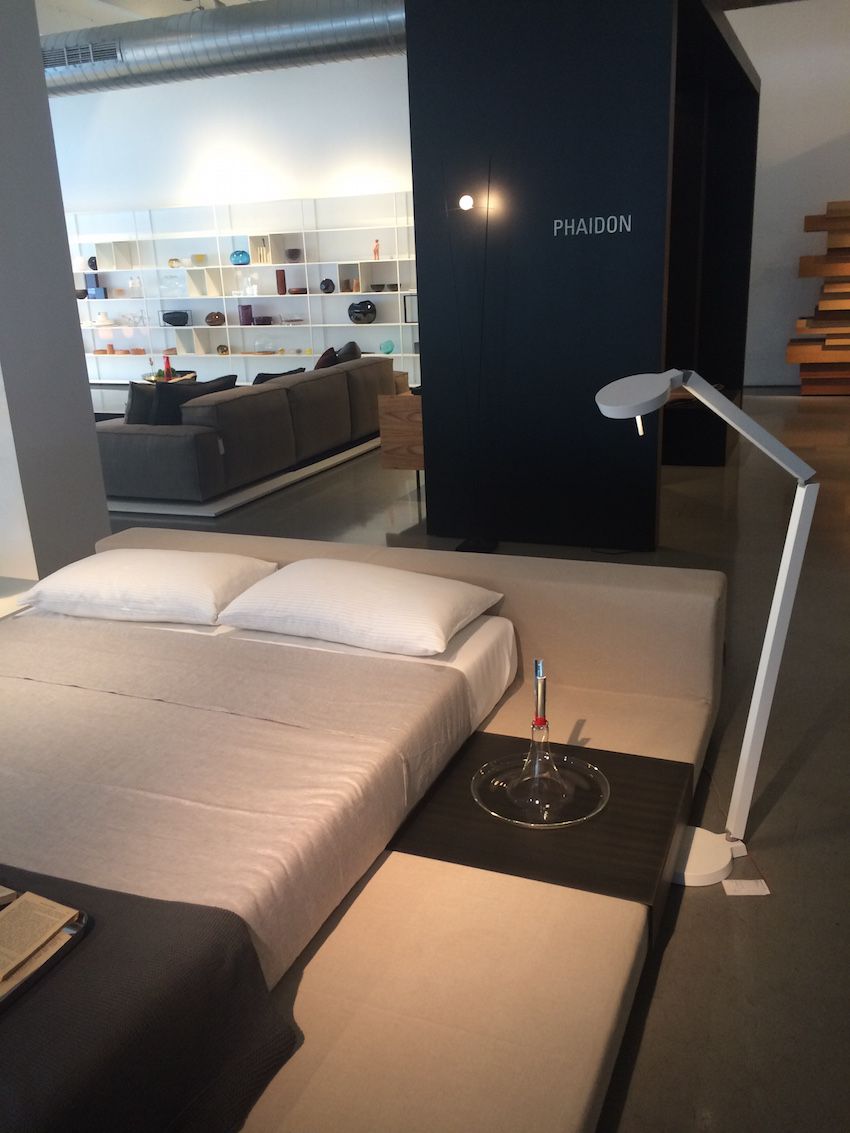
Although we mentioned one strategy for choosing a light fixture for your minimalist bedroom in the art & décor section, that’s certainly not the only way. Light itself plays a major role in the feeling of an interior space, as we all know, and a lighting fixture has a large impact as well. Make sure you choose a lamp (the bedside lamp is probably the primary lighting fixture you’ll be dealing with, other than the main overhead light) that works with your goals, including having well-designed, clean lines.

Lighting that doesn’t meet the actual lighting needs of a space isn’t even worth having in the space, so be sure you choose a piece that is functional. If you’re selecting bedside lamps, be sure they are able to illuminate whatever you might need them to light up – a book, a computer, or whatever. And the lamp really can, and should, go one of two directions aesthetically: it should either stand out as its own major design element, or it should harmonize seamlessly with the rest of the minimalist bedroom pieces. Either/or, but not between.

That’s the main strategy for creating your own minimalist bedroom. Here are a few other points to keep in mind: Some designers feel that a minimalist bedroom should be monochromatic, specifically with white, cream, or pale grey. This is negotiable, as your bedroom should reflect YOU, but it’s an idea. Furthermore, plenty of natural light is always a good thing in a minimalist space – let Mother Nature decorate for you, in a way. Designing your minimalist bedroom is “about harmonizing a space and creating a perfect balance of leaving certain spaces in a room void of furnishings and accessories. The colors, patterns, furniture, and accessories will definitely depend on one’s taste”. Most of all: Enjoy the process!
You’re reading How to Create Your Own Minimalist Bedroom , originally posted on Homedit. If you enjoyed this post, be sure to follow Homedit on Twitter, Facebook and Pinterest.
Concrete Lamps And Their Unexpected Warming Effect On Our Homes
We’ve established that wood pendant lamps make spaces feel warm, cozy and inviting so, using that logic, should concrete lamps make a space feel cold and austere? Not at all. Even though concrete is a rough and cool material, it doesn’t really have the expect effect on the interior décor of a room. In fact, it can make a space feel quite homey and enjoyable.

Lighting fixtures such as the Monk Lamp definitely have a strong presence. Created by SKELD Design, this lamp is short and stubby and this gives it a really cute look. At the same time, it has a concrete shade which hides the light, giving the lamp a mysterious allure.

Before totally dismissing concrete lamps as interior design accessories, take into consideration the concrete’s stoney texture and beautiful gray color as well as its heavy and at the same time delicate presence. These are actually the characteristics of the Concrete Ball pendant designed by German Gonzales Garrido.

When combined with other materials, concrete lends its beautiful attributes while also taking on some new characteristics. There’s this exchange of elements that always has a unique result. Concrete and wood make a nice duo, complementing each other in the most wonderful way. Atelier Mazine took advantage of this when designing the Twig I, II and III lamps.

The Concrete Conic and Concrete Big lamps by Renate Vos combine this material with silicone rubber. The result is a lampshade with a translucent skirt. The effect is really beautiful especially considering the way in which the light warms up the cool concrete shade.

Dragos Motica designed by Slash Lamp and gave it this cool industrial look by combining concrete and reinforcing wire. The two materials were fused together to create a cylindrical shade which exposed portions that let the metal grid show through. The light pours out and creates unique effects.

There’s also a lot to love about a lamp or pendant made entirely of concrete without any other materials to provide contrast. A beautiful case is the series of pendant lamps designed by Stefan Gant. They range in shape and size and they all look elegant and glamorous thanks to their gold accent details.

Named Light O, this cute thing is the perfect accent piece for a desk or nightstand. It has a bell-shaped concrete shade that sits on a plywood base. The shade can be positioned in three different ways and each variant looks playful and fun. The red power cord adds a touch of color, highlighting the cheerful nature of the lamp.


How cool is this lamp? It doesn’t have a switch or a shade and it doesn’t even have a power cord. It’s called the Brick Lamp and it was designed by HCWDstudio. To turn the lamp on simply lift it. Lay it flat on a surface to turn it off. You can find it in three versions: wood, concrete and aluminum.
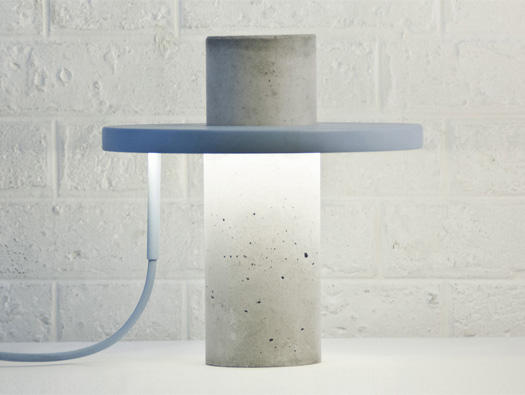
The Totem Lamp is pretty unusual too. Designed by Alexandre Dubreuil, the lamp is composed of two elements. One is a concrete column and the other is a disc which is placed on the upper section, acting as a shade. This allows the lamp to double as a modern sculpture. It’s possible to combine the two elements in various different ways or even to use them separately.
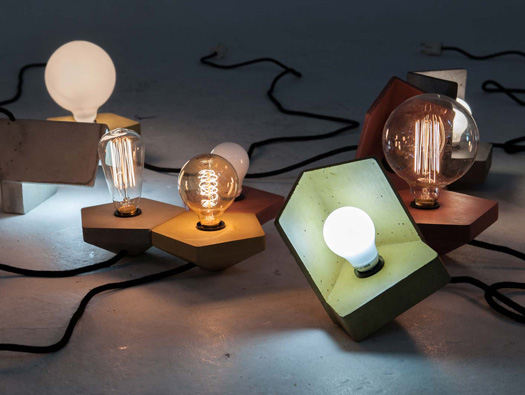
Studio-ory decided to explore the properties of concrete and to see what makes this material unique in terms of gravity, mass and balance. These tributes were used in the designs of these quirky little lamps. They can be displayed and used in a variety of ways and they’re always stable and cute. They’re available in natural gray, black, yellow and red.

They look like they’re made of paper but they’re actually cast in concrete. These lamps and pendants are designed by Miriam Aust and Sebastian Amelung and they have paper-like creases and folds which give them a really authentic look. They’re really fun and they make great gifts and home accessories.

Available in two versions, as a table lamp and as a pendant light, the Release and Split light fixtures are the creation of Dror Kaspi for Ardoma Design and they look particularly intriguing. As the name suggests, they look like they’re split in two and the split reveals the glowing light. This creates a contrast between the concrete and the light.

Concrete Home Design created an innovating line of lamps. The Ideeal ceiling and table lamps explore the unique particularities of concrete and use them to look chic and stylish. The designs are modern-industrial with simple and clean lines and smooth angles. They attract quite a bit of attention with their fancy forms and glass sections.
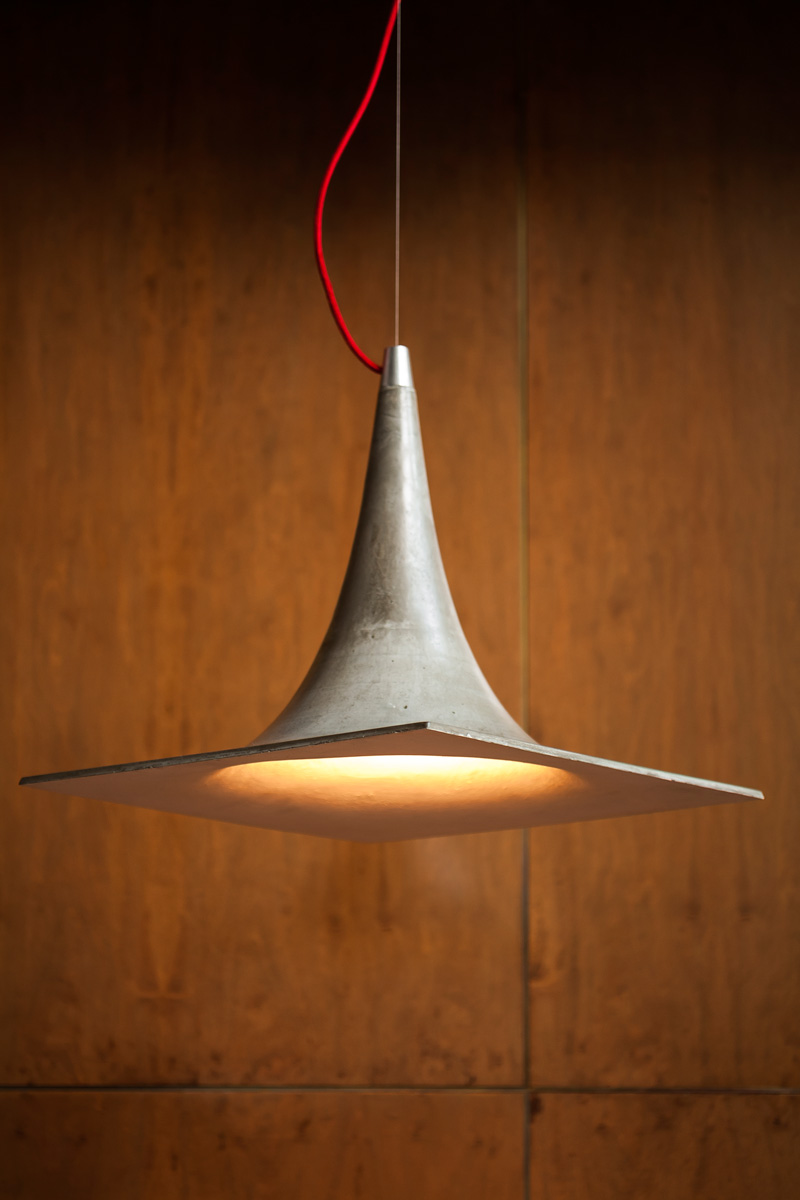
Concrete can be lightweight, even though this seems unusual. Further more, it can look very light if shaped in a certain manner. Designer Christian Mohaded knows this very well after creating the Andes Lamps. They have a fluid and delicate design and this allows them to create a sense of weightlessness which is not usually a characteristic of this material.

Small and really versatile, the Nomad table lamp combines the ruggedness of concrete with the delicate beauty of the vintage Edison light bulb. The result is a warm and very pleasant accessory which can look charming on desks and nightstands. This charm is partially given by the combination between concrete and glass but also by the warm glow of the bulb.

A similar combination is features by this desk lamp that we found on Etsy. It has a sturdy and compact concrete base shaped like a cube and it illuminates using a vintage Edison bulb. It’s a handcrafted product which means that each piece is different and unique, with its own imperfections.

Edison light bulbs are pretty popular right now. They’re appreciated for their warm glow and their beautiful designs and a lot of table lamps take advantage of this to look as simple and as charming as possible. One example is this concrete lamp from ConcWood Street.

The fun thing about the Screscent lamp is that it’s actually only half of a lamp. It’s as if a full lamp was cut in half and split in two. It’s made of concrete and it can displayed in all sorts of interesting and funky ways. The design was 3D modeled in order to ensure a steady and balanced form.

Geometric designs are pretty hot right now too. If you like the trend, perhaps you’d like to also add one of these little lamps to your home décor as well. This is the Cubistic lamp. It has a solid concrete base and an exposed bulb which together allow it to look minimalistic and quite fancy.

If you like the idea of having a concrete lamp but can’t really find one that suits your needs, maybe you’d like to craft one yourself. A DIY concrete lamp can be a really nice home project. If you’d like to make a floor lamp similar to this one, make sure you have two containers for the mold, some timber, insulating material, electric cable, a switch, a craft knife and lean concrete. Find all the details on Instructables.
You’re reading Concrete Lamps And Their Unexpected Warming Effect On Our Homes , originally posted on Homedit. If you enjoyed this post, be sure to follow Homedit on Twitter, Facebook and Pinterest.
How To Make Edible Christmas Ornament Treats for Birds & Wildlife – Apartment Therapy Tutorials
If you love making Christmas cookies, add in a batch of edible ornaments for wildlife this season. Hang them outside on a tree outside your window and watch your outdoor space become a resting spot – and holiday dinner table – for birds and squirrels.
1937 Classical Revival – Kings Mountain, NC – $399,500
 Beautiful historic home near downtown Kings Mtn. Sits on over an acre of land. Renovated with modern touches, but still has historic charm. This home features hardwood floors, foyer with stairway, granite countertops in cooks kitchen. There are 8 fireplaces through out. Finished basement with media & game room great for entertaining.
Agate Napkin Rings for a Holiday Dinner Table
It’s so nice when it’s finally the holiday season and you go to pull out your fancy table settings and you smile because you love those pieces. But if you’re me, you rummage around and remember that you have some nice things you love, but you always like having something new and fun at the table for guests to comment on. These DIY agate napkin rings are perfect for just that. They are incredibly easy to make and really inexpensive.

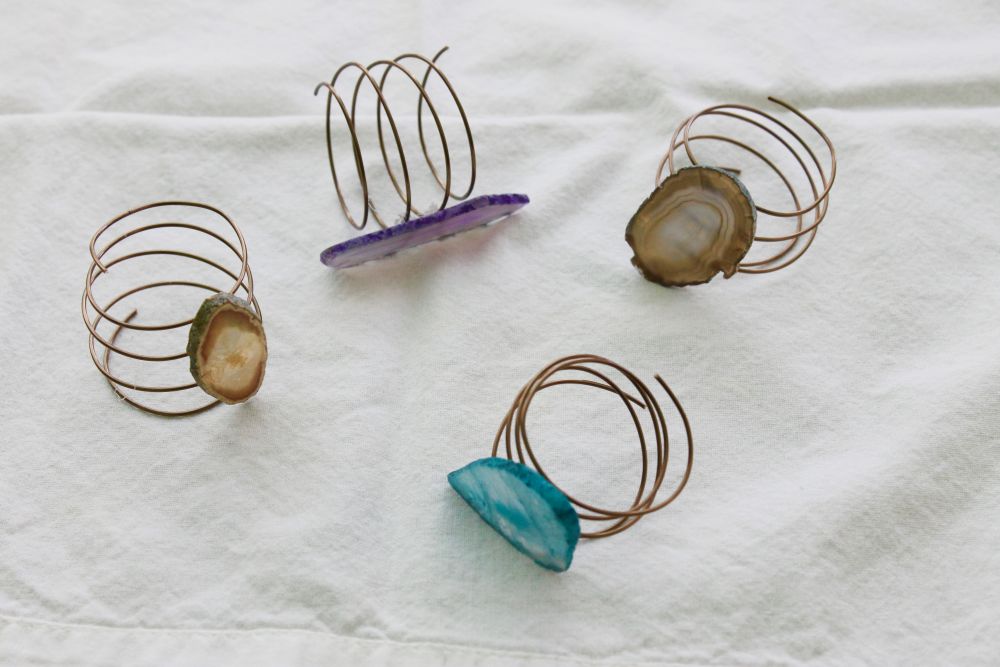
There’s nothing better than when a guest comes to your holiday dinner and complements you on something you made. Especially when it didn’t cost a fortune and was simple to make because then you can make something new every year and not feel bad about it! So keep reading to see what you need to make these fun agate napkin rings!
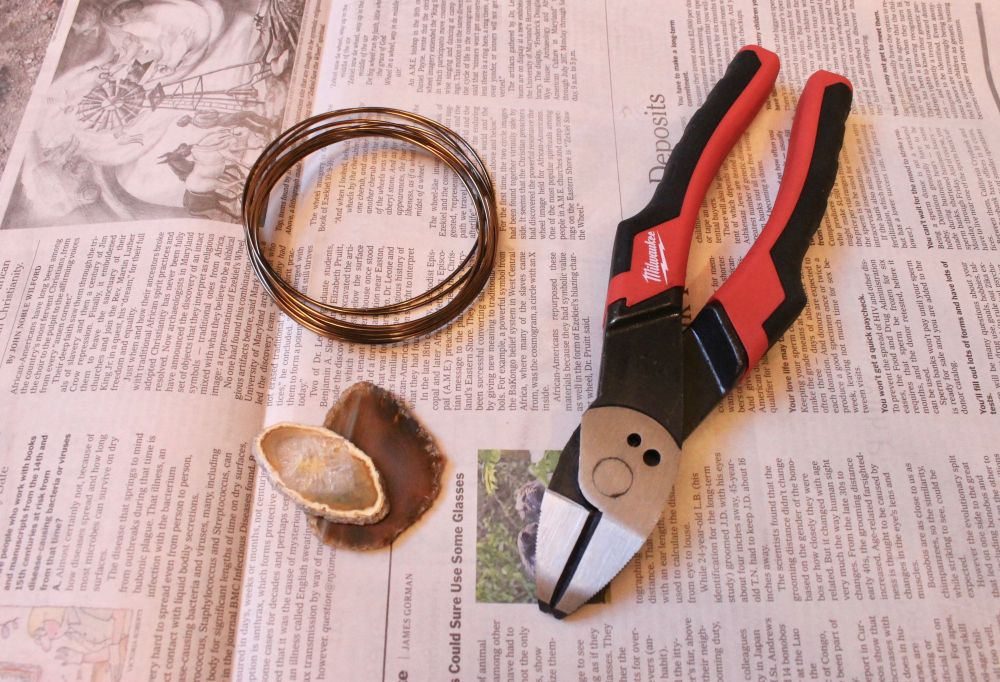
Materials to make these agate napkin rings:
- Agate stones
- Wire
- Wire cutters
- Hot glue gun
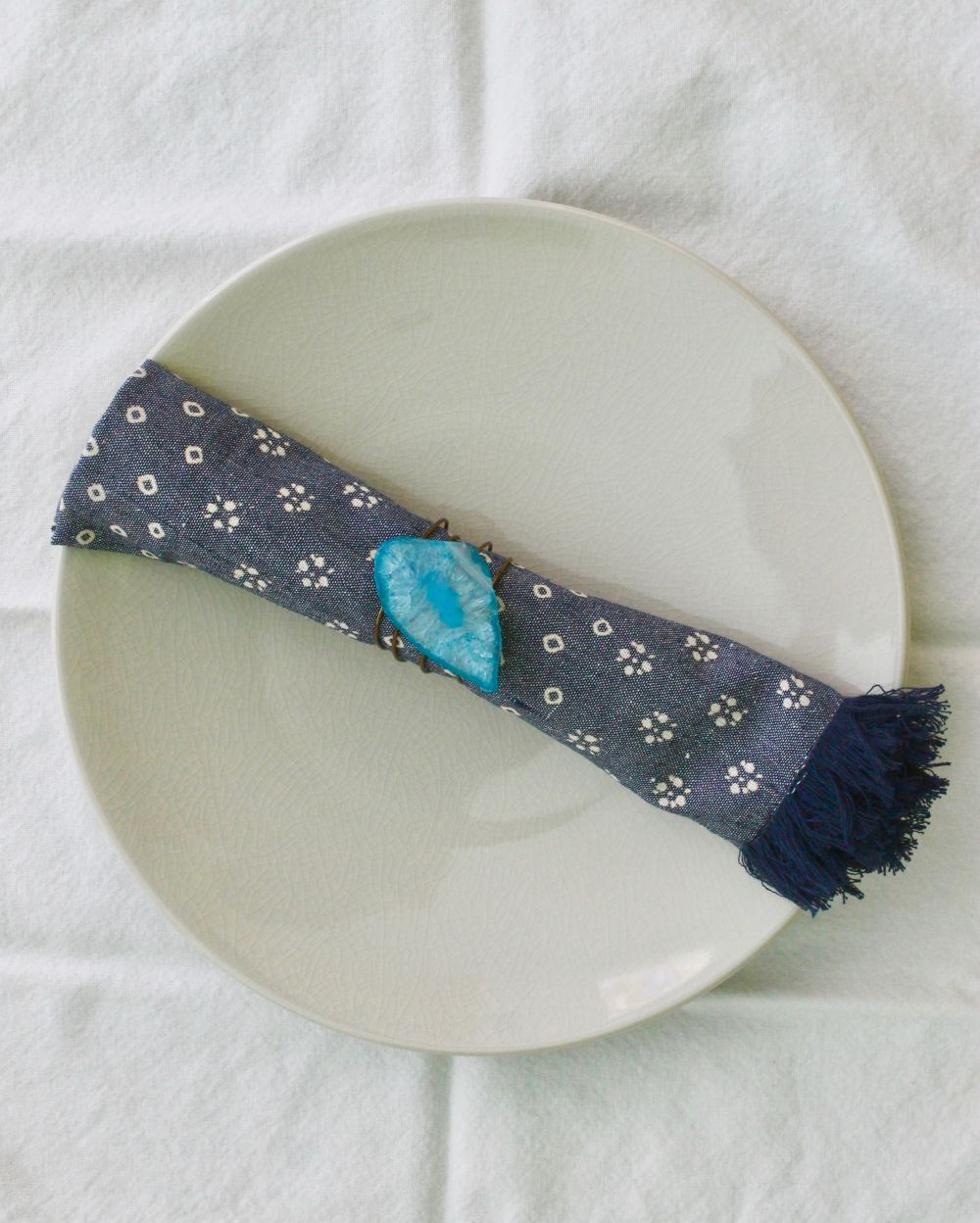
How to make these agate napkin rings:
First you’ll want to start heating up your glue gun depending on how long it takes to heat up (mines from the 90’s so it takes a while…).
Start by finding the end of the wire and starting to bend it into a tighter spiral. I curled mine to be about an inch and a half in diameter. Keep curling it around until the wire curves around a full circle four times.
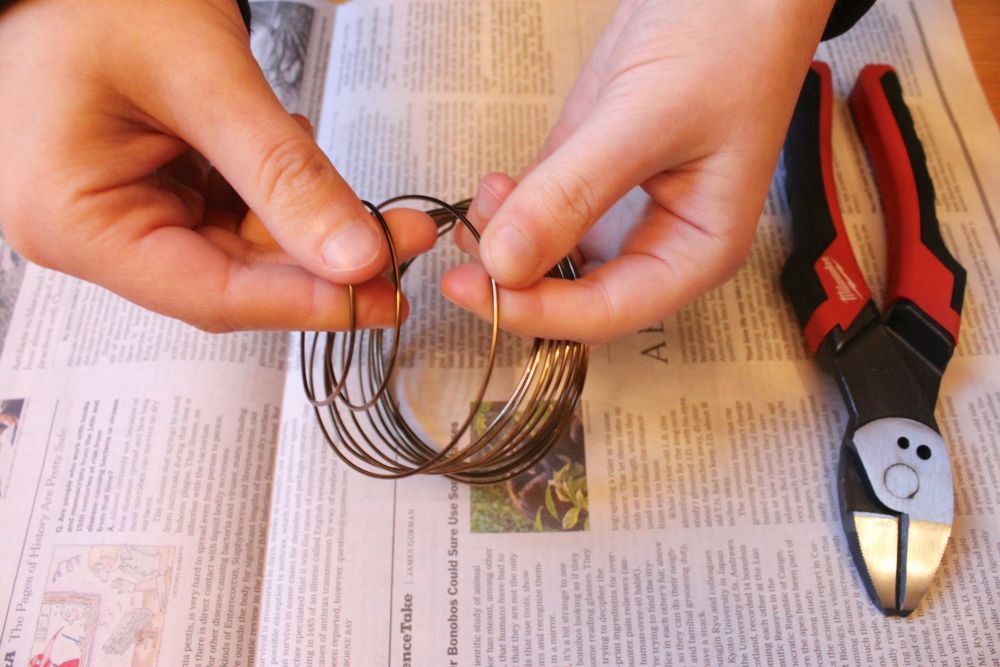
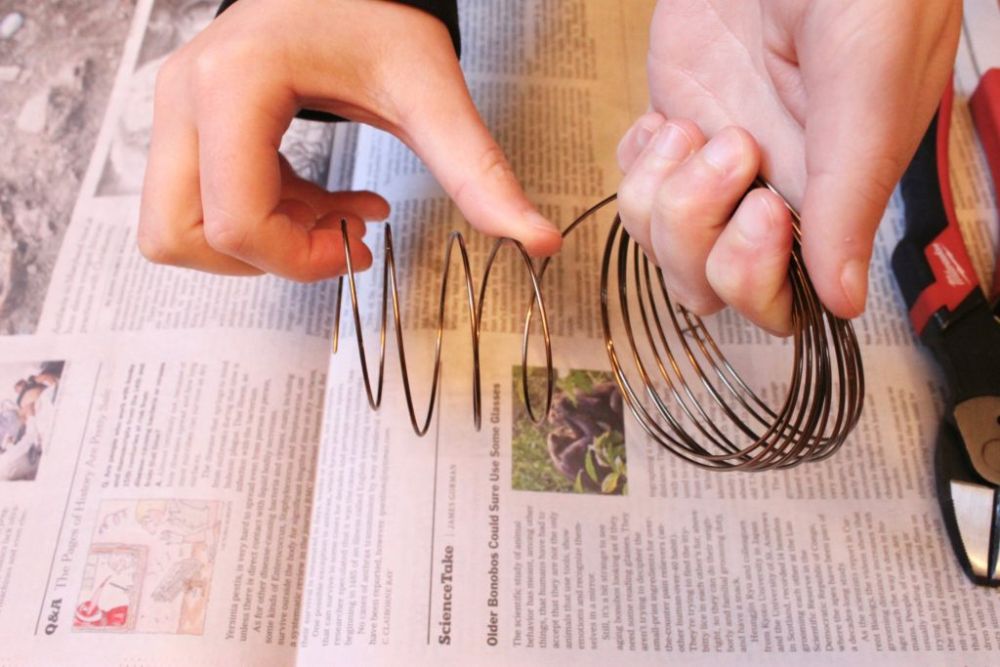
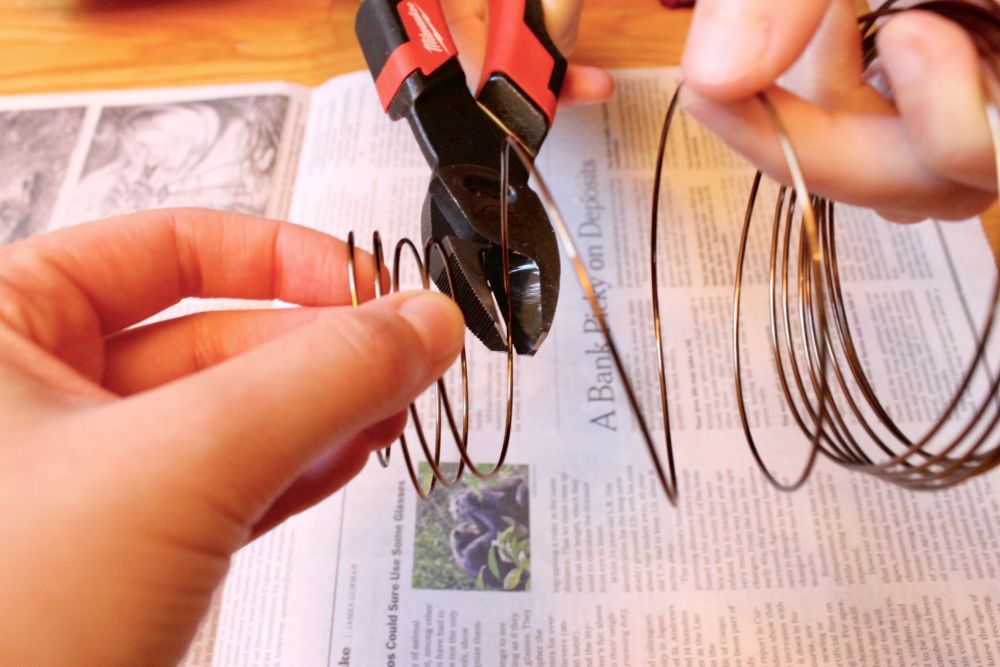
Once you have your smaller spiral shaped how you want it, use your wire cutters to cut your spiral off from the rest of the wire.
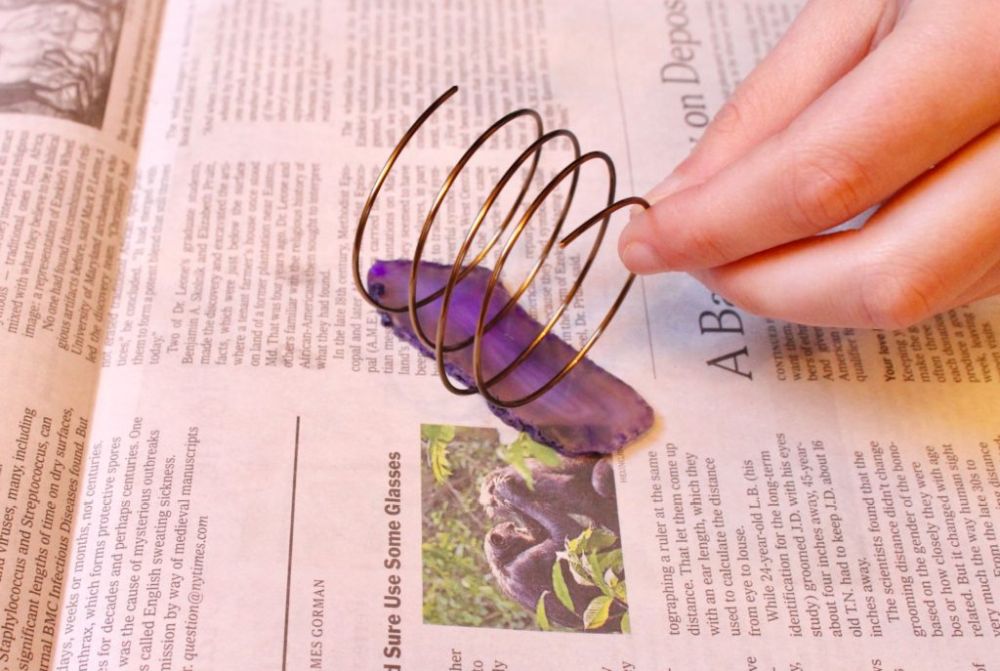
Align the agate stone with the spiral in a way that looks nice to you. You want the agate stone to directly touch at least two of the wires in the spiral. Place the agate face down on a flat surface and place the spiraled wire over the agate how you like it.

Now, take your hot glue gun and glue two of the metal wires to the agate. Make sure it’s well attached by wiggling the spiral around slighty to coat the glue evenly.
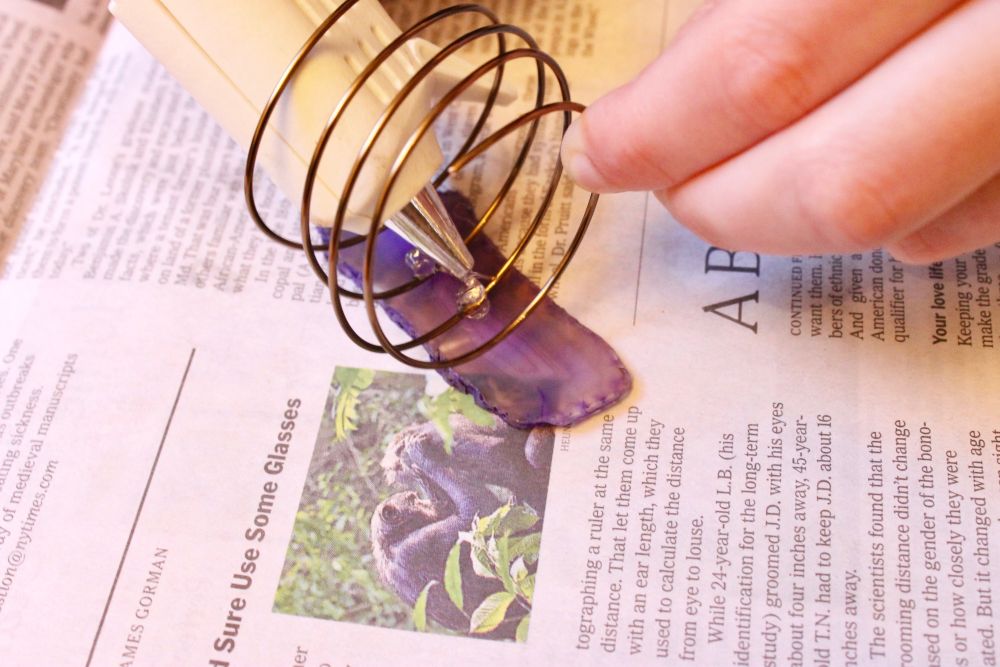
Let it cool for a minute and you’re all finished. Repeat and make enough agate napkin rings for all your guests!
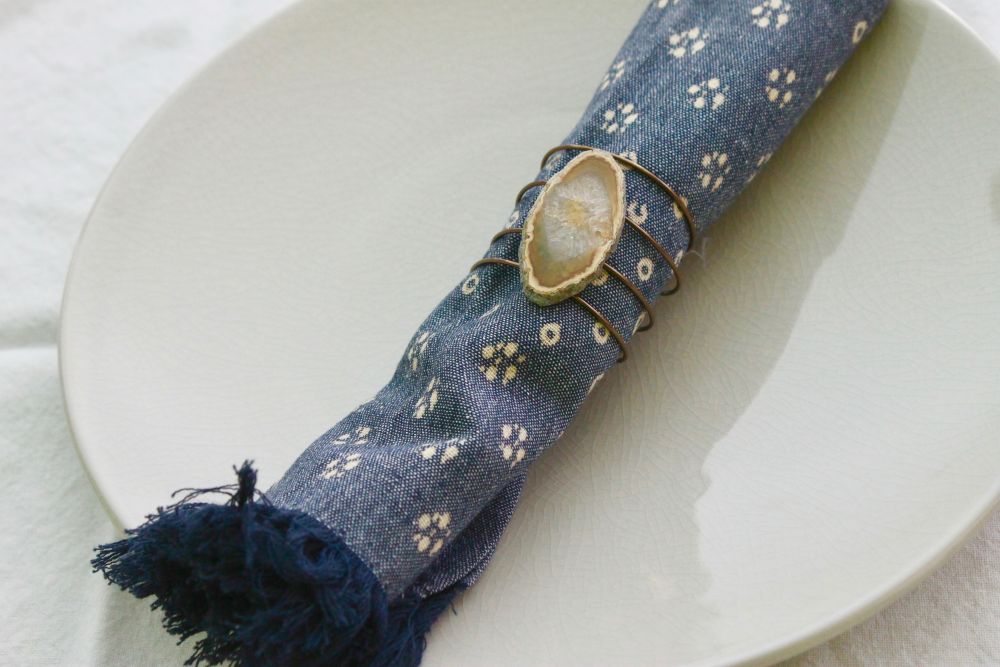
These DIY agate napkin rings couldn’t be easier and you can get fun colored stones that match your napkins perfectly, or you can just buy an assortment like I did and take your chances with random! Either way, you’ll be sure to impress your family and friends with this one, and I’m sure they will all be dying to make their own agate napkin rings for their next dinner party!

You’re reading Agate Napkin Rings for a Holiday Dinner Table , originally posted on Homedit. If you enjoyed this post, be sure to follow Homedit on Twitter, Facebook and Pinterest.
1861 – Ripon, WI – $289,000
 World Class Residence on 5 Acres … Once in a rare while will a truly magnificent home such as this become available. This 11 room Greek Revival style home with its striking architecture and high ceilings, is a product of an era when homes were built for gracious living. You will marvel at the beautiful woodwork and enormous cook’s kitchen with stainless steel appliances. Featuring 5 bedrooms, 3 full baths, living room with floor to ceiling windows, a den with built-ins, and formal dining room. Updates in 2016 include all (3) new bathrooms & game room/bedroom in the upper level.
5 Wellness Morning Rituals Everyone Should Try At Least Once
What you do first thing in the morning makes a huge impact on the rest of your day and your overall wellbeing. Instead of rushing out the door every morning, try setting your alarm a little bit earlier and moving slowly and more mindfully through your morning with these five easy wellness rituals.

